

CHAMPS News
Ethiopia Takes a Bold Step: Launching a Unified Strategy for Double-Fortified Salt to Prevent Neural Tube Defects
Neural tube defects (NTDs), including spina bifida and anencephaly, are severe congenital conditions affecting the brain and spine. Nearly all NTDs are a result of low folic acid levels in pregnant women during very early pregnancy. While approximately 65 countries have implemented mandatory folic acid fortification of staple grains to combat NTDs, over 100 countries continue to face significant barriers, including limited infrastructure for large-scale grain fortification and insufficient political will. In Ethiopia, the absence of centralized grain production has long hindered progress. However, emerging evidence has opened a promising alternative. A study from India published in JAMA Network Open demonstrated that adding folic acid to commercially available iodized salt effectively raised participants’ folate levels to those needed to prevent neural tube defects. As a result, folic acid fortification of salt has emerged as a promising public health strategy to prevent neural tube defects.
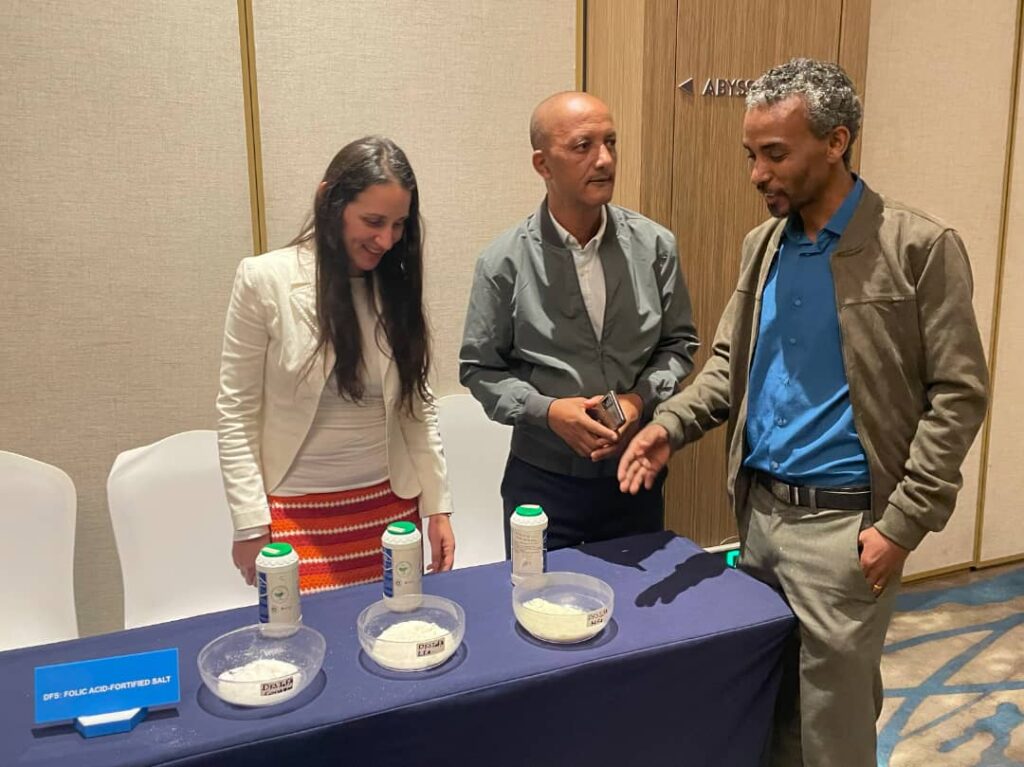
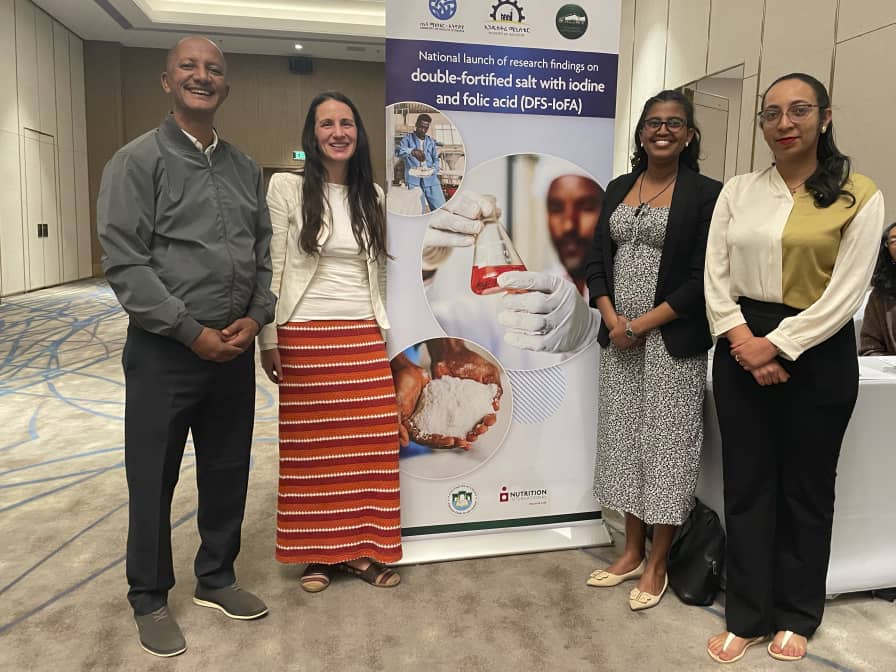
The Government of Ethiopia and its partners recently launched a unified national roadmap toward mandatory salt fortification. By adding both iodine and folic acid to staple foods widely consumed in Ethiopia, the country is taking a decisive step to reduce neural tube defects (NTDs) and improve neonatal survival nationwide.
A High Burden of Preventable Birth Defects
Ethiopia faces a critical public health challenge, with NTD prevalence reaching over 100 cases per 10,000 births in some parts of the country, over three times the continental average. The consequences for families are devastating, often resulting in stillbirth or the loss of a newborn. In the CHAMPS catchment areas, population-based surveillance known as the SALT study has detected 178 cases over two years, of which 47% had spina bifida and 43% were fatal cases of anencephaly or craniorachischisis. Alarmingly, 53% of those cases born alive do not survive. Implementing this cost-effective fortification program is an essential and urgent step to reduce these high rates and give every child a healthier start in life.
For years, the CHAMPS Ethiopia site at Hararghe Health Research has worked to understand the causes of child mortality in the Harar and Eastern Hararghe zones. Our research has shown that NTDs are a significant contributor to neonatal deaths and stillbirths. Our pregnancy surveillance and SALT study provided evidence that a lack of sufficient maternal folic acid is a key factor contributing to these preventable tragedies.
Although iodized salt has been a public health success in Ethiopia for years, folic acid fortification remains a critical gap. Recognizing that pregnancies are planned and that the neural tube forms in the first weeks of pregnancy, when most women are still unaware of their status, the most effective way to reach women before and during early pregnancy is through the foods they consume daily. The Government of Ethiopia, in partnership with Nutrition International, identified salt as the optimal vehicle for delivering folic acid on a large scale.
CHAMPS’ mission is to generate high-quality data that saves children’s lives, and seeing this evidence translated into national policy demonstrates the real impact of data-driven action.
Why Double-Fortified Salt Matters
Double-fortified salt offers several public health benefits, including:
- Universal Reach: Salt is consumed by nearly everyone, regardless of socio-economic background.
- Cost-Effective: It is among the most affordable ways to deliver essential micronutrients.
- Seamless Integration: Double-fortified salt may be slightly more yellow than regular salt, but studies on acceptability have shown good adoption, especially when consumers are aware of the nutritional benefits.
- Proven Impact: Raising folic acid intake before and during early pregnancy has proven to be able to prevent neural tube defects.
We commend the Ethiopian Ministry of Health, the Ethiopian Food and Drug Authority, and Nutrition International for their sustained collaborative leadership. For CHAMPS, this milestone reflects years of dedicated work by our teams in the Hararghe area, Eastern Ethiopia. By identifying the specific causes of death through rigorous surveillance, we enable partners and policymakers to focus on interventions with the greatest potential impact. Documenting the high burden of NTDs ensured stakeholders fully understood the size of the problem. Our SALT project, which aims to unmask the real burden of NTD at the population level and its outcomes, as well as explore how the community perceives NTD and its causes, has been central to this effort, bridging clinical evidence and national health strategy.
Looking Ahead
Ethiopia’s national strategy for producing double-fortified salt (DFS) signals a strong commitment to the country’s future and promises meaningful improvements in child health and survival. This policy has the potential to dramatically reduce preventable birth defects and give more children the chance to survive and thrive. The CHAMPS platform will play a pivotal role in measuring the impact of this intervention and related policy changes; if the new program works as anticipated, the number of NTDs identified by CHAMPS and the SALT study will drop dramatically. CHAMPS remains committed to supporting Ethiopia’s health journey and will closely monitor the long-term effects of double-fortified salt as part of our mission to prevent child mortality and protect every life.
Take action: Visit the Hararghe Health Research Salt Project and read Nutrition International’s full announcement to understand how you can support and help spread evidence-based solutions like double-fortified salt in Ethiopia and beyond.